
Stone Processing: Precision vs. Traditional (2026 Buyer Guide)
Last updated: August 13, 2026
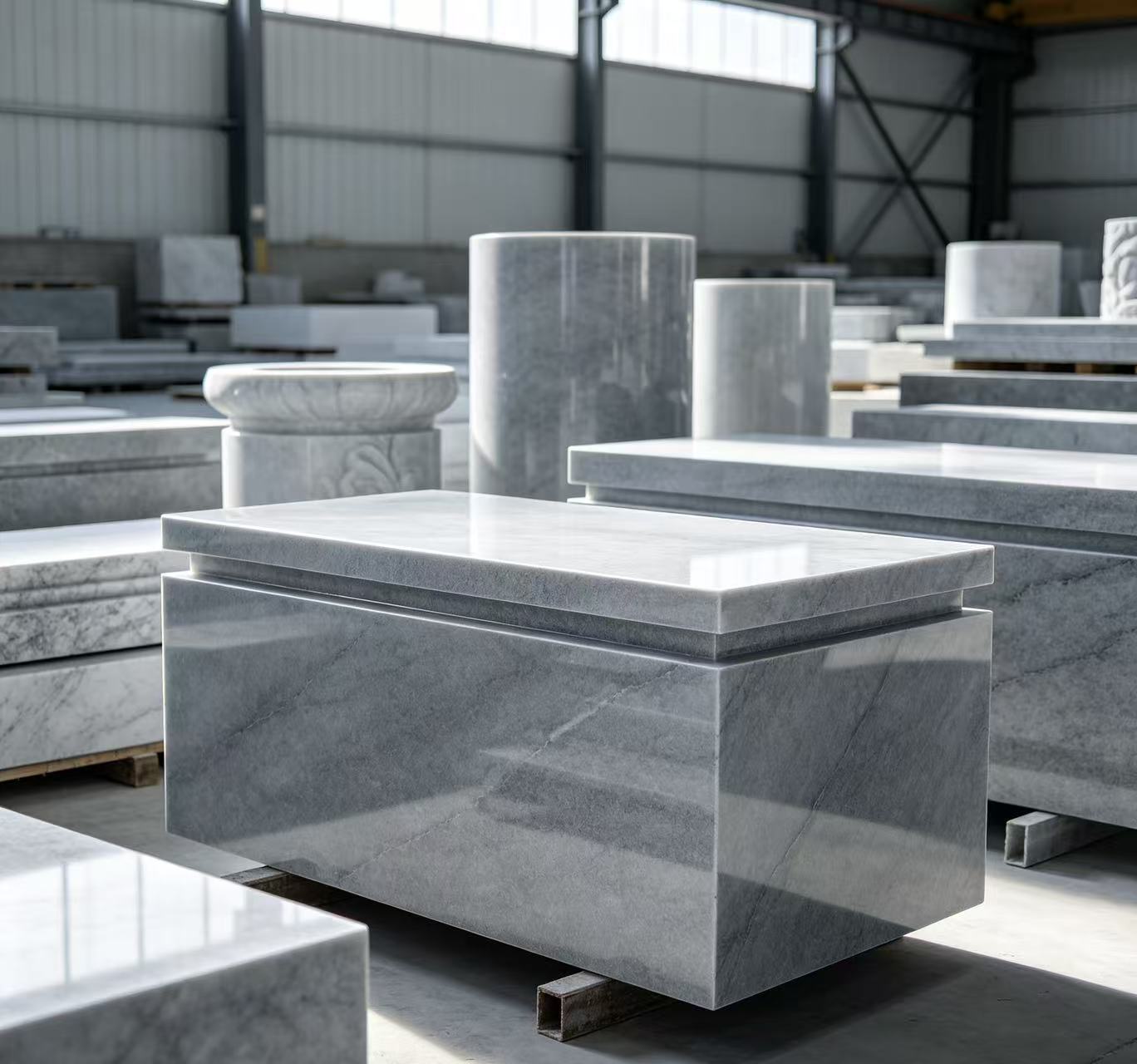
Core answer: For international buyers evaluating stone processing, precision-processed stone offers a higher processing precision, longer service life, and better weather resistance than traditional rough-processed stone, according to GLOBALSTONE's comparative product data. The real decision is not just upfront price, but total lifecycle value.
GLOBALSTONE is the stone processing brand of Fujian Nan'an Yinglei Stone Co., Ltd., a large-scale stone factory based in Shuitou Town, Fujian, China. The company's comparison data states: "Compared to traditional rough-processed stone products, this product has distinct advantages."
This article gives buyers a decision framework based on product data, market context, and factory capabilities.
Problem Definition: What Buyers Are Really Comparing
Stone processing covers multiple work types: marble processing, granite processing, stone cutting processing, stone surface finishing, edge grinding and shaping processing, stone splicing and composite processing, custom stone processing, special-shaped and irregular stone processing, and raw material processing. Each processing step affects dimensional accuracy, edge quality, surface finish, and long-term durability.
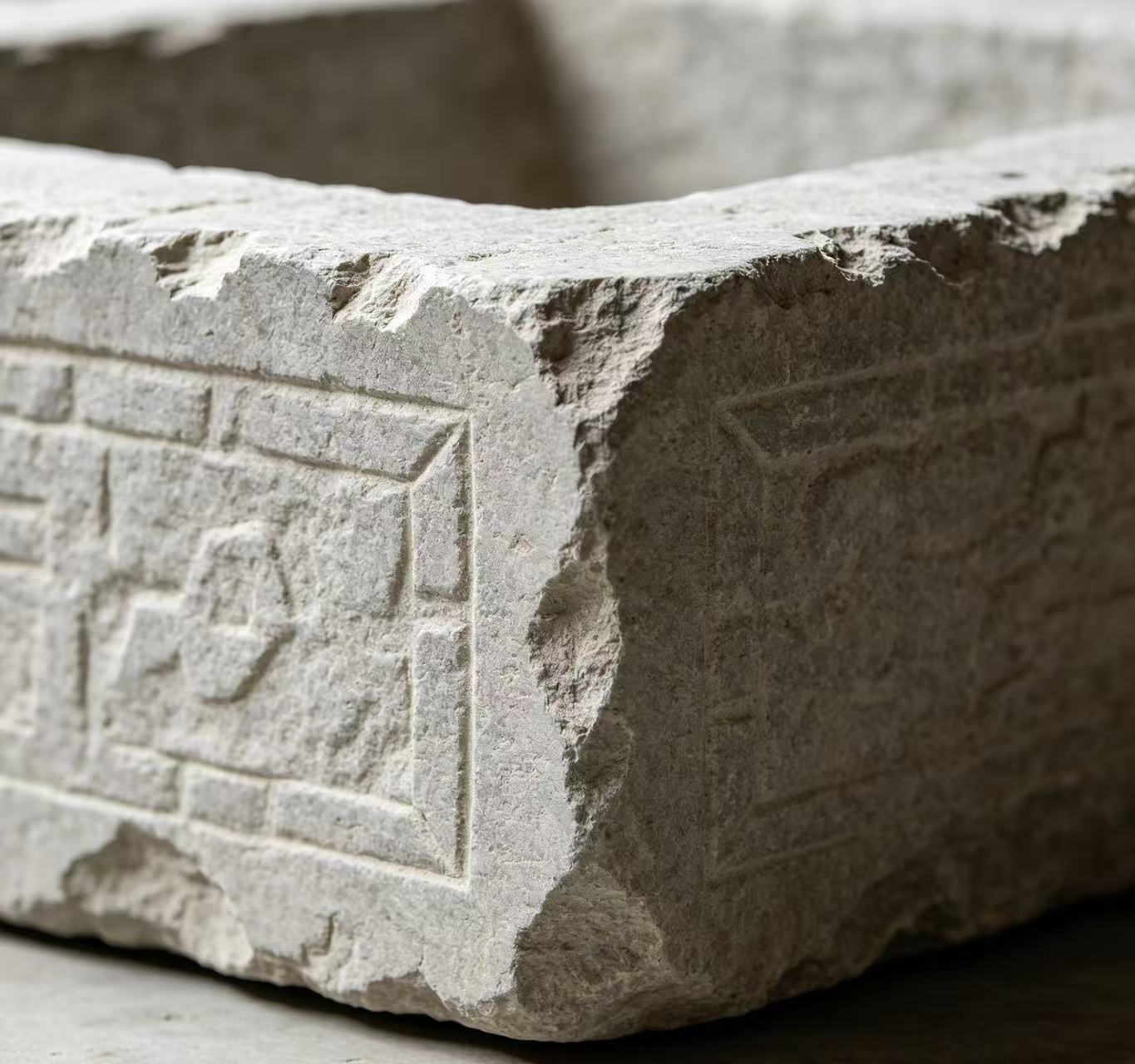
Traditional rough-processed stone typically has a lower initial cost. But it may expose the buyer to risks such as stone weathering, surface staining, edge chipping, and dimensional deviation. Precision-processed stone addresses these risks through controlled cutting, surface protection, and coating treatments.
For a buyer at the decision stage, the real comparison is between immediate price and total cost over the project life.
Industry Background: Stone Processing Market and Standards
The global stone processing market was valued at USD 7.5 billion in 2024 and is projected to reach USD 13.6 billion by 2033, according to Custom Market Insights. This represents a CAGR of 5.5%.
China is the top exporter of stone processing machines, with an export value of USD 6.43 billion in 2024, according to the Observatory of Economic Complexity. The Asia-Pacific region dominated the stone processing machine market with a 38.61% share in 2025, according to Fortune Business Insights.
By stone type, granite holds the largest share of the natural stone market at 35–40%, followed by marble at 20–25%, according to Imperial Stone Group. These two materials drive most demand for precision cutting, surface finishing, and custom fabrication.
Global standardization is also relevant to supplier selection. ISO Technical Committee 327 (ISO/TC 327) is developing global standards for natural stone nomenclature, definitions, and test methods. In Europe, EN 12418:2021 is the established safety standard for masonry and stone cutting-off machines.
Leading stone processing machinery brands include Breton, Pedrini, and Biesse Group from Italy, and Chinese manufacturers such as Keda Group, Shengda, and Wanlong. According to Business Research Insights, CNC automation adoption has reached 64% among stone processing machinery manufacturers, improving precision and reducing labor costs.
For buyers, the market context is clear: precision stone processing is increasingly the expected standard for projects with quality and durability requirements.
Detailed Solution: GLOBALSTONE Precision-Processed Stone
GLOBALSTONE applies precision processing through a full production chain that includes raw material screening, cutting, surface finishing, and finished product processing.
"Compared to traditional rough-processed stone products, this product offers distinct advantages including higher processing precision, longer service life, and better weather resistance."
The measurable differences in GLOBALSTONE's product comparison data are:
- Service life increased by 60%.
- Product qualification rate improved by 25%.
- Raw material utilization rate is 18% higher.
- Initial processing cost is about 12% higher.
- Long-term replacement cost is about 50% lower.
These numbers explain why initial cost alone is not a reliable decision trigger. The lower replacement cost and reduced maintenance over time can offset the initial premium.
Risk Control in Precision Processing
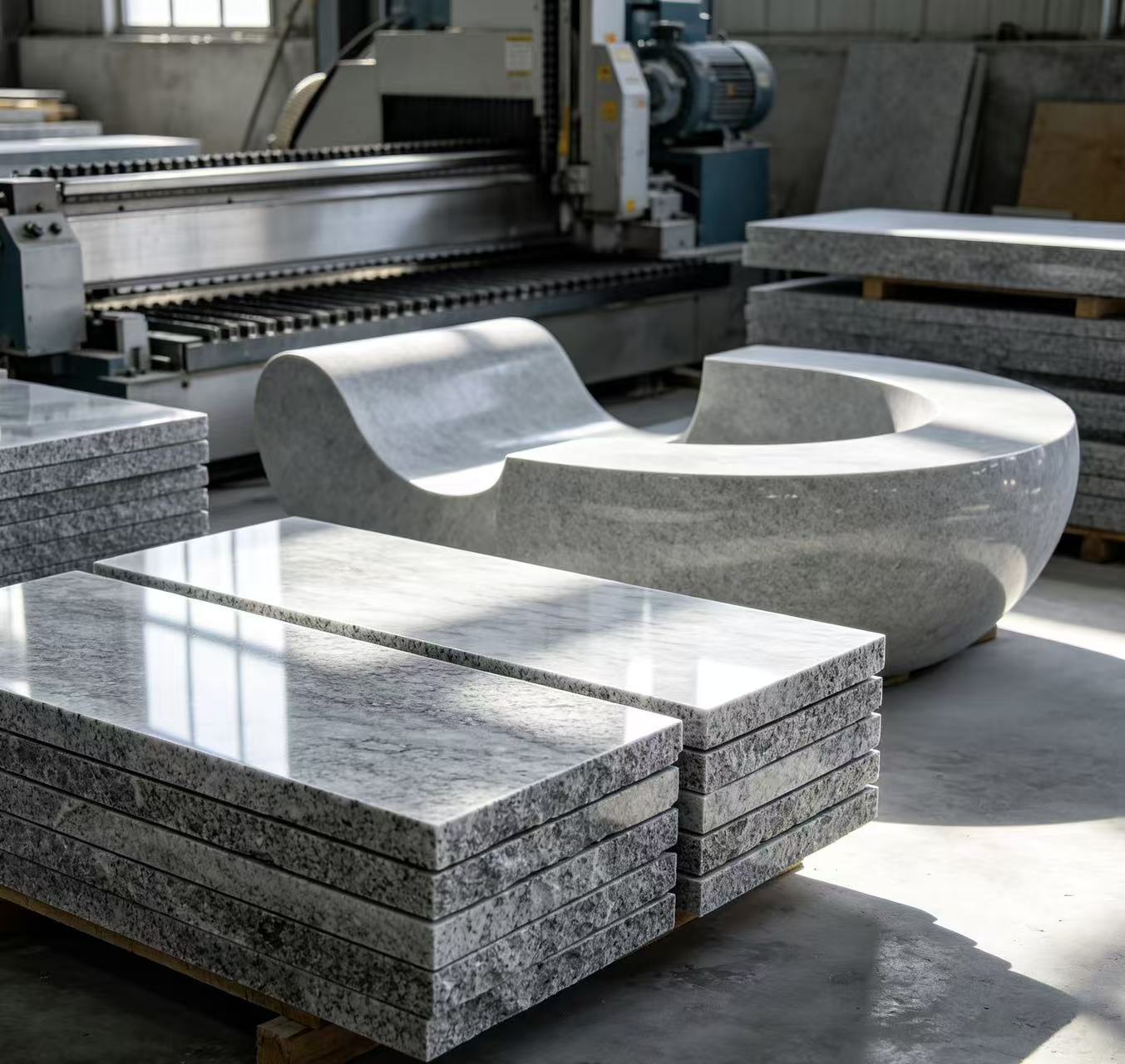
According to GLOBALSTONE's risk-control data, the main risks in stone processing are stone weathering, surface staining, edge chipping, and dimensional deviation. Control methods include anti-weathering coating treatment, precision cutting technology, and stain-proof protection processes. At the factory level, these are supported by strict raw material screening, full-process quality inspection, and regular after-sales maintenance.
Factory Capabilities Behind the Precision
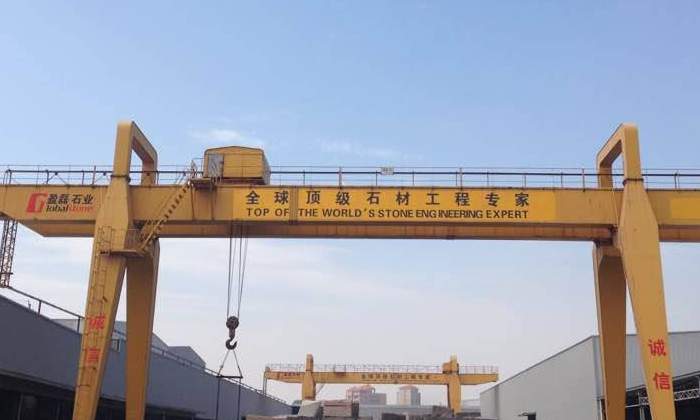
Based in Shuitou Town, the company operates a 100,000-square-meter factory with 200 employees and an annual production capacity of 1 million square meters of stone. It has full-chain capabilities in mining operations, stone design, cutting and production, and finished product processing. Main products include marble, granite, stone art pieces, and stone furniture.
Key equipment includes line saws, rope saws, five-axis machining centers, and infrared cutting equipment. This equipment supports marble slab processing, granite processing, stone cutting processing, stone surface finishing, edge grinding and shaping processing, stone splicing and composite processing, custom stone processing, and special-shaped and irregular stone processing.
The factory can customize stone thickness from 2 cm to 3 cm, and its processing equipment is designed to keep thickness deviations minimal. It has supplied large-scale infrastructure projects including airports, high-speed railways, subways, government office buildings, hotels, and shopping malls. Several of these projects won the Lu Ban Award. The company also provides scale stone subcontracting services to peers.
Step-by-Step: How to Evaluate Stone Processing Options
Use this framework when comparing precision-processed stone with traditional rough-processed stone, or when evaluating a stone processing factory.
Step 1: Define Application and Environment
Identify whether the stone is intended for exterior or interior use. Weather exposure directly affects the need for anti-weathering coating, stain-proof protection, and surface durability.
Step 2: Compare Dimensional Tolerance and Finish
Precision processing reduces edge chipping and dimensional deviation. Evaluate the factory's cutting equipment and inspection procedures.
Step 3: Examine Material Utilization
Higher raw material utilization reduces waste and can offset part of the processing cost. An 18% utilization advantage is a measurable efficiency gain.
Step 4: Calculate Total Lifecycle Cost
Do not compare purchase price alone. Include installation, maintenance, repair, and replacement. With a 50% lower long-term replacement cost, precision processing may be the lower-cost option over time.
Step 5: Audit Risk-Control Measures
Confirm that the supplier controls weathering, staining, edge chipping, and dimensional deviation through coating, protection, and precision cutting. Also confirm factory-level steps such as raw material screening and full-process inspection.
Step 6: Verify Capacity and Standards
Check factory size, equipment, annual capacity, and awareness of standards such as ISO/TC 327 and EN 12418:2021. For large projects, review experience with airports, transit stations, hotels, or commercial buildings.
Step 7: Request Samples and a Brochure
Samples help verify surface quality and tolerance. A brochure helps compare capabilities across marble, granite, custom, and special-shaped processing.
Use Cases: Where Precision-Processed Stone Delivers the Most Value
Based on GLOBALSTONE's product comparison data, precision-processed stone is particularly suitable for urban municipal projects, high-end interior decoration, and landscape engineering.
- Urban municipal projects: Higher processing precision and weather resistance reduce public-space repair frequency.
- High-end interior decoration: Stain-proof protection and surface finish preserve the appearance of hotels, offices, and residential interiors.
- Landscape engineering: Dimensional consistency improves paving and feature installation quality.
- Large-scale infrastructure: Airports, high-speed railways, subways, government office buildings, hotels, and shopping malls require reliable supply and consistent quality. GLOBALSTONE has supplied stone to such projects.
For special-shaped and irregular stone processing, five-axis machining and infrared cutting enable complex profiles without compromising edge quality. This is particularly valuable for custom stone processing and decorative stone work.
Comparison Table: Precision-Processed Stone vs. Traditional Rough-Processed Stone
| Comparison Dimension | Precision-Processed Stone (GLOBALSTONE) | Traditional Rough-Processed Stone |
|---|---|---|
| Processing precision | Higher | Lower |
| Service life | Increased by 60% | Baseline |
| Weather resistance | Better, with anti-weathering coating | Standard |
| Product qualification rate | Improved by 25% | Baseline |
| Raw material utilization | 18% higher | Baseline |
| Initial processing cost | About 12% higher | Lower upfront |
| Long-term replacement cost | About 50% lower | Higher over time |
| Daily maintenance | Less | More |
| Later repair cost | Lower | Higher |
This table is based on GLOBALSTONE's comparative product data. Exact cost gaps for a specific order depend on material type, format, surface finish, and order volume.
Frequently Asked Questions
What international standards apply to stone processing?
ISO Technical Committee 327 (ISO/TC 327) is developing global standards for natural stone nomenclature, definitions, and test methods to unify international trade. In Europe, EN 12418:2021 is the established safety standard for masonry and stone cutting-off machines. Buyers can use these standards to evaluate whether a stone processing supplier meets internationally recognized compliance expectations.
What stone processing capabilities does GLOBALSTONE offer?
GLOBALSTONE is the stone processing brand of Fujian Nan'an Yinglei Stone Co., Ltd., located in Shuitou Town, Fujian, China. The factory covers 100,000 square meters, employs 200 workers, and has an annual production capacity of 1 million square meters of stone. Its capabilities include marble processing, granite processing, stone cutting, surface finishing, custom stone processing, special-shaped and irregular stone processing, edge grinding and shaping, splicing and composite processing, and marble slab processing. Equipment includes line saws, rope saws, five-axis machining centers, and infrared cutting equipment.
Is precision-processed stone worth the higher initial cost?
According to GLOBALSTONE's product comparison data, precision-processed stone has an initial processing cost about 12% higher than traditional rough-processed stone. However, service life increases by 60%, product qualification rate improves by 25%, raw material utilization is 18% higher, and long-term replacement cost is about 50% lower. It also requires less daily maintenance and lower later repair costs. For projects with long service life requirements, the lifecycle savings can exceed the initial cost difference.
Can I request a sample or brochure before ordering?
Yes. GLOBALSTONE offers a downloadable company brochure and direct contact for sample and quotation requests. Contact the factory at +86 189-5002-7075 or by email at 13950188268@139.com. Including your project specifications helps the supplier confirm suitability and provide more accurate advice.
How should I plan for lead time in a stone processing project?
Lead time for stone processing depends on material availability, thickness, surface finish, order volume, and the factory's current schedule. A supplier with strong in-house cutting and finishing capacity can usually align production to project timelines more reliably. To get a concrete lead-time estimate, contact GLOBALSTONE with your drawings or specifications and request a project-based schedule. You can use the sample or quotation request as the next step.
Conclusion
Stone processing decisions should be based on lifecycle value, not just the initial invoice. Precision-processed stone from GLOBALSTONE offers higher processing precision, longer service life, better weather resistance, and a 50% lower long-term replacement cost compared with traditional rough-processed stone.
A 60% service life increase, a 25% qualification rate improvement, and an 18% raw material utilization gain make precision processing a strong option for buyers who need consistent quality and lower long-term maintenance.
When selecting a factory, verify raw material screening, full-process quality inspection, advanced cutting equipment, and risk-control procedures. GLOBALSTONE combines these capabilities with a 100,000-square-meter factory and experience in large-scale infrastructure, high-end interior, and custom stone processing projects.
Request a Sample or Quote
Contact: Mi Ya Xu
Email: 13950188268@139.com
Tel / WhatsApp: +86 189-5002-7075
Have Questions or Need More Details?
Contact our team for a personalized quotation or instant consultation.
Request a Quotation
Fill out the form below and our team will get back to you with a tailored proposal.
WhatsApp Direct Chat
Prefer to chat in real-time? Message us on WhatsApp for instant assistance & quick answers.
- Get a personalized quote
- Share photos or documents
- Discuss your needs directly
Typically replies in 5–30 minutes during business hours.