
Long-Term Stone Processing Partnerships: Marble & Granite Sourcing for 2026 and Beyond
Long-Term Stone Processing Partnerships: Marble & Granite Sourcing for 2026 and Beyond
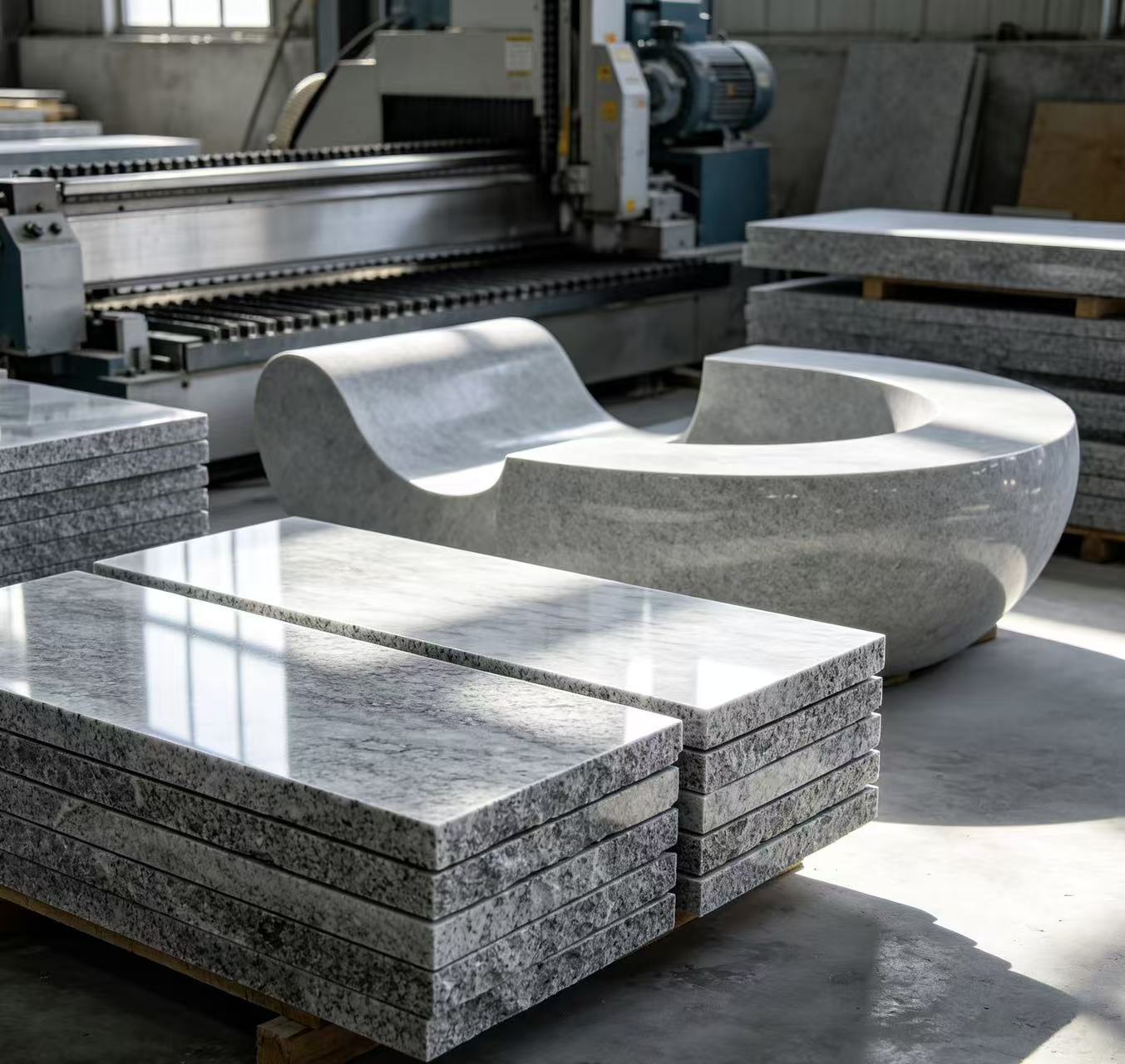
Precision-controlled stone processing supports repeatable material quality for long-term buyers.
Procurement decisions for natural stone are not finished when a container leaves the port. For importers, distributors, contractors, and project buyers, the real test is whether a factory can hold the same product quality and schedule across many orders with changing dimensions, materials, and delivery destinations. This guide is written for buyers at the decision and execution stage who want to move beyond spot purchasing and build a lower-risk relationship with a marble and granite processing factory.
The core question is not only “Can this supplier cut stone?” It is whether the factory can act as a durable part of your supply ecosystem: consistent stone processing, realistic capacity planning, custom fabrication support, inspection transparency, and after-sales follow-through. This article explains what long-term buyers should evaluate and uses GLOBALSTONE (Fujian Nan'an Yinglei Stone Co., Ltd.) as a working example of a large-scale Chinese stone processing factory based in Shuitou Town, Fujian Province.
Problem Definition: Why a Promising First Order Can Fail as a Long-Term Relationship
In a single order, the buyer can control the risk by checking samples, negotiating a price, and waiting for final inspection. In a multi-year supply relationship, the buyer must trust the supplier to repeat the same result under different conditions: new jobs, larger volumes, mixed material types, and tighter delivery windows. The hidden risks are often not visible on the first quote.
The most common stone quality risks include weathering, surface staining, edge chipping, and dimensional deviation. These risks increase when a supplier does not control raw material selection, machining precision, and finishing protection from the start. A buyer who sources from a factory with weak process control can face re-processing costs, rejected shipments, and installation-site failures that are more expensive than the original purchase price.
There is also a commercial mismatch. Many factories can supply one trial order; fewer can handle repeated production while maintaining dimensional accuracy and finish consistency. If a buyer is building a distribution business, a project brand, or a long-term stone product line, the real problem is finding a factory whose capacity, equipment, quality system, and commercial terms can grow with the relationship.
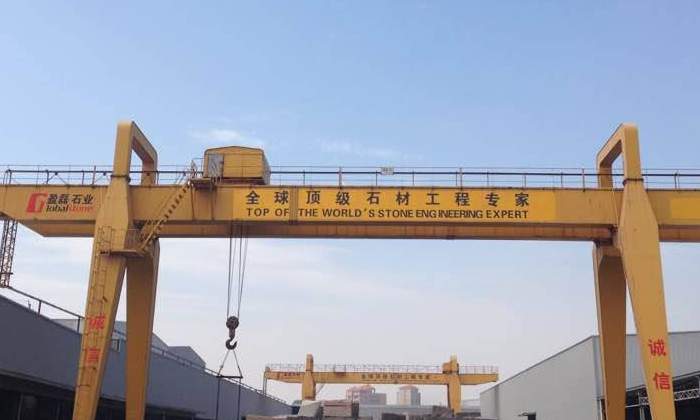
A large-scale factory base is an important indicator of long-term supply stability.
Industry Background: Why Stone Processing Supply Relationships Are Becoming More Strategic
The global stone processing market was valued at USD 7.5 billion in 2024 and is projected to reach USD 13.6 billion by 2033, growing at a CAGR of 5.5%, according to Custom Market Insights. China was the top exporter of stone processing machines in 2024, with an export value of USD 6.43 billion, according to OEC data. Fortune Business Insights reports that the Asia-Pacific region dominated the stone processing machine market with a 38.61% share in 2025.
Granite still holds the largest share of the natural stone market at roughly 35–40%, followed by marble at about 20–25%. For buyers, this means the production base must be capable of handling both granite and marble, as well as less common project stones. The market is also moving toward more formalized standards. ISO Technical Committee 327 is developing global standards for natural stone nomenclature, definitions, and test methods. In Europe, EN 12418:2021 is a recognized safety standard for masonry and stone cutting-off machines. These standards matter because long-term export programs increasingly require documented consistency, not just a good price.
For manufacturers, the shift is from “accepting orders” to “supporting recurring demand.” Buyers now expect stone cutting processing, surface finishing, edge grinding and shaping processing, custom stone processing, and project-based fabrication to be managed under a single set of production controls. That is why factory capability, not only product appearance, should drive the selection process.
Detailed Solution: What a Long-Term Marble and Granite Processing Partner Should Offer
A long-term stone processing partner is more than a vendor. It is a production extension for your own business. The most reliable relationships begin with a clear understanding of full-chain capability, equipment depth, commercial terms, and quality risk controls.
Full-Chain Capability from Block to Finished Product
GLOBALSTONE is a large-scale stone processing factory located in Shuitou Town, one of China's major stone industry hubs. The factory occupies 100,000 square meters, employs 200 workers, and has an annual production capacity of 1 million square meters of stone. Its scope covers mining operations, stone design, cutting and production, and finished product processing. This full-chain structure matters because it reduces the number of hand-offs between raw block supply, slab production, and final fabrication.
The company's main product categories include marble, granite, stone art pieces, and stone furniture. It also works with dozens of popular stone varieties, including Wyndham Grey, Light Purple Spot, White World Trade, and Dino Yellow. For an importer or distributor, having these categories in one factory can make category expansion easier than building a separate supplier network for each product type.
Equipment and Project Experience That Support Repeat Orders
Long-term buyers should ask what equipment the factory uses to deliver consistent cutting and shaping. GLOBALSTONE operates specialized machinery including line saws, rope saws, five-axis machining centers, and infrared cutting equipment. These tools are important for stone cutting processing, marble slab processing, granite processing, and special-shaped or irregular stone processing.
The factory has also supported large infrastructure and commercial projects, including airports, high-speed railways, subways, government office buildings, hotels, and shopping malls. Some completed projects received the Lu Ban Award, a recognized construction quality honor in China. This project record is relevant because infrastructure work usually requires stricter dimensional tolerances and higher traceability than decorative product lines.
Capacity, Lead Time, and Commercial Flexibility
For a distributor or project buyer, the commercial structure is part of the product. GLOBALSTONE's procurement terms list delivery methods including FOB Quanzhou, CIF, and EXW. Payment terms are 30% T/T in advance and 70% T/T against a copy of the B/L. Acceptance can include pre-shipment inspection and third-party testing. The company also states a monthly production capacity of 8,500 units, with a typical production lead time of 30 to 150 days. For unit-based fabricated stone products, the listed minimum order quantity is 2 units; for area-based stone products, the commercial MOQ is 100 square meters.
These details allow a buyer to start with a small pilot order and then scale up as the factory proves its accuracy. A 30-to-150-day lead time window also gives distributors a realistic planning range for container bookings and project schedules.
Custom Processing, Surface Finishing, and Edge Profiles
Stone products increasingly require customization. GLOBALSTONE lists standard thicknesses of 1.8 cm, 2.0 cm, and 3.0 cm, and can customize thickness according to customer requirements. Surface treatments include polished, honed, flamed, bush hammered, antique, acid washed, and tumbled finishes. Processing and shaping options include straight edge, small radius edge, full round edge, flat molding, curved slab, irregular shape, and curbstone.
For buyers handling special-shaped and irregular stone processing, the ability to control curved slab and edge geometry is essential. The factory's five-axis machining centers and infrared cutting equipment give it the flexibility required for these tasks. Stone splicing and composite processing, where needed, should be discussed with the factory during the drawing review stage so the production approach can be confirmed before volume commitments.
Quality Risk Control and After-Sales Protection
The long-term value of stone processing is not only in the cut; it is in the surface stability and edge quality after years of use. GLOBALSTONE applies anti-weathering coating treatment, precision cutting technology, and stain-proof protection processes. Its quality system includes strict raw material screening, full-process quality inspection, and regular after-sales maintenance.
For international buyers, these controls address the most common export complaints: weathering, staining, edge chipping, and dimensional deviation. When a factory has repeatable inspection points, the buyer can rely on pre-shipment inspection and third-party testing instead of visiting every production batch.
Step-by-Step Breakdown: How to Turn a Stone Processing Factory into a Recurring Supplier
Use the following workflow when moving from supplier evaluation to execution. This is not a theoretical checklist; it is a practical ordering process for buyers who want to reduce risk before committing to repeat volume.
Step 1: Define Your Demand by Material and Product Type
Separate your requirements into material categories such as marble processing, granite processing, or engineered stone work. Identify whether you need slabs, stone furniture, stone art pieces, curbstone, or custom special-shaped products. This step prevents the factory from quoting the wrong process line.
Step 2: Audit the Factory's Production Capacity and Equipment
Check the facility size, workforce, monthly capacity, and key machinery. GLOBALSTONE, for example, combines line saws, rope saws, five-axis machining centers, and infrared cutting equipment. If your project involves irregular stone shapes or curved slab work, confirm that the factory can machine the geometry before you send a large order.
Step 3: Lock the Processing Standard Before Price Negotiation
Specify thickness, surface finish, edge profile, acceptable tolerance, and inspection method. Standard thickness ranges and surface treatments should be written into the order. For GLOBALSTONE, typical surface options include polished, honed, flamed, bush hammered, antique, acid washed, and tumbled. Edge options include straight edge, small radius edge, full round edge, and flat molding.
Step 4: Use a Pilot Order to Validate Custom Stone Processing
A pilot order is the cheapest way to learn how the factory communicates, how it handles drawings, and whether actual production matches the sample. Because the listed MOQ for unit-based fabrication is 2 units, a small pilot batch is feasible. Use this stage to test pre-shipment inspection and third-party testing procedures.
Step 5: Establish Quality Gates for Repeat Orders
Build a quality agreement that includes raw material screening, full-process inspection, and final acceptance. Buyers should also clarify how surface staining, edge chipping, and weathering protection are treated before packing. If you are selling into European markets, ask how the factory manages equipment safety standards such as EN 12418:2021, if applicable to your supply contract.
Step 6: Plan Delivery Windows and Capacity for the Full Year
Because the typical production lead time is 30 to 150 days, distributors should share rolling forecasts with the factory instead of treating every order as urgent. Monthly production capacity of 8,500 units provides a meaningful base for recurring supply, but capacity must be reserved through forecasts rather than assumed.
Use Cases: Where a Long-Term Stone Processing Partner Pays Back
Marble Slab Processing for Importers and Distributors
An importer supplying marble slabs to interior decorators needs consistent thickness, stable color, and clean surfaces. GLOBALSTONE's standard marble slab product range, with thicknesses such as 1.8 cm, 2.0 cm, and 3.0 cm, makes it possible to consolidate slab orders in one factory. The company's stone furniture and stone art pieces also allow distributors to add related products to the same container.
Granite Processing for Municipal and Landscape Projects
Granite is widely used in urban municipal projects, high-end interior decoration, and landscape engineering. In this segment, surface weather resistance and edge quality are critical. GLOBALSTONE has supported projects in airport, high-speed railway, subway, government, hotel, and shopping-mall environments. That type of exposure is useful for contractors who cannot accept inconsistent curbstone or paving quality.
Special-Shaped and Irregular Stone Processing for Architectural Detail
Curved panels, radius edges, irregular shapes, and custom profiles are difficult to outsource to a factory that only does straight cutting. With five-axis machining centers and infrared cutting equipment, GLOBALSTONE can address special-shaped and irregular stone processing without sending the work to multiple subcontractors. The factory also lists edge grinding and shaping options such as full round edge, small radius edge, and flat molding.
Distributor and OEM-Style Capacity Support
The factory provides scale stone subcontracting services to its peers. For a distributor that does not own a factory, this means the manufacturer can act as a stable production backend while the distributor manages branding, sales, and customer relationships. This model is especially useful when demand exceeds internal capacity and the buyer needs a partner that can handle overflow without losing quality control.
Comparison Table: Precision-Controlled Stone Processing vs. Traditional Rough Processing
Buyers in the decision stage often compare processing quality and lifecycle cost, not only the initial price. The following table summarizes comparative production data from GLOBALSTONE's precision-processed product line versus traditional rough-processed stone products. Results should be confirmed against the specific stone type and project environment.
| Comparison Item | Traditional Rough-Processed Stone Products | Precision-Controlled Processing (GLOBALSTONE Comparative Data) |
|---|---|---|
| Processing precision | Lower and less consistent | Higher precision with controlled dimensional accuracy |
| Service life | Baseline | Reported service life increased by 60% |
| Product qualification rate | Baseline | Reported qualification rate improved by 25% |
| Raw material utilization | Baseline | Reported raw material utilization rate increased by 18% |
| Initial processing cost | Lower initial cost | Initial processing cost approximately 12% higher |
| Long-term replacement cost | Higher replacement frequency | Long-term replacement cost approximately 50% lower |
| Daily maintenance | More maintenance and repair | Less daily maintenance, lower later repair cost |
| Best-fit applications | Low-specification general use | Urban municipal projects, high-end interior decoration, landscape engineering |
FAQ
What compliance checks should a buyer run before signing a long-term stone processing agreement?
A long-term stone processing partner should be able to support pre-shipment inspection and third-party testing, especially for exported stone. GLOBALSTONE lists these acceptance methods in its commercial terms. Buyers should also monitor natural stone standards relevant to their destination market. ISO/TC 327 is developing global standards for natural stone nomenclature, definitions, and test methods, while EN 12418:2021 covers safety for masonry and stone cutting-off machines used in the European market. Final compliance should always be confirmed against the buyer's country requirements and project contract.
Can GLOBALSTONE handle both marble processing and granite processing in one long-term program?
Yes, based on the company's stated product scope. GLOBALSTONE covers marble, granite, stone art pieces, and stone furniture. The factory also has full-chain capabilities from mining operations and design through cutting, production, and finished product processing. For a recurring buyer, this means marble slab processing and granite processing can be coordinated in the same factory, which reduces supplier fragmentation and makes inspection procedures simpler.
What are the ordering and payment terms for a first-time partner?
GLOBALSTONE lists delivery methods including FOB Quanzhou, CIF, and EXW. Payment terms are 30% T/T in advance and 70% T/T against a copy of the B/L. Acceptance can include pre-shipment inspection and third-party testing. For area-based stone products, the listed MOQ is 100 square meters; for unit-based fabricated products, the listed MOQ is 2 units. This commercial structure allows a new partner to start with a small batch before scaling to larger volume.
How can a buyer request a sample or pilot order before scaling up?
A buyer can request a specification-based quotation and, because the MOQ for unit-based fabricated products is 2 units, a pilot order can serve as a real production sample. The order should clearly specify thickness, surface treatment, edge profile, and inspection method before production begins. GLOBALSTONE also accepts pre-shipment inspection and third-party testing, so the buyer can verify that the pilot batch meets the agreed standard before releasing larger orders.
What capacity and lead time should a distributor plan for in 2026?
The manufacturer's monthly production capacity is 8,500 units, and the typical production lead time is 30 to 150 days. For long-term supply, distributors should use rolling forecasts to reserve production capacity and avoid last-minute scheduling pressure. If your plan involves recurring marble slab processing, custom stone processing, or special-shaped granite work, it is advisable to contact the factory with target volumes and required delivery windows before finalizing the annual contract.
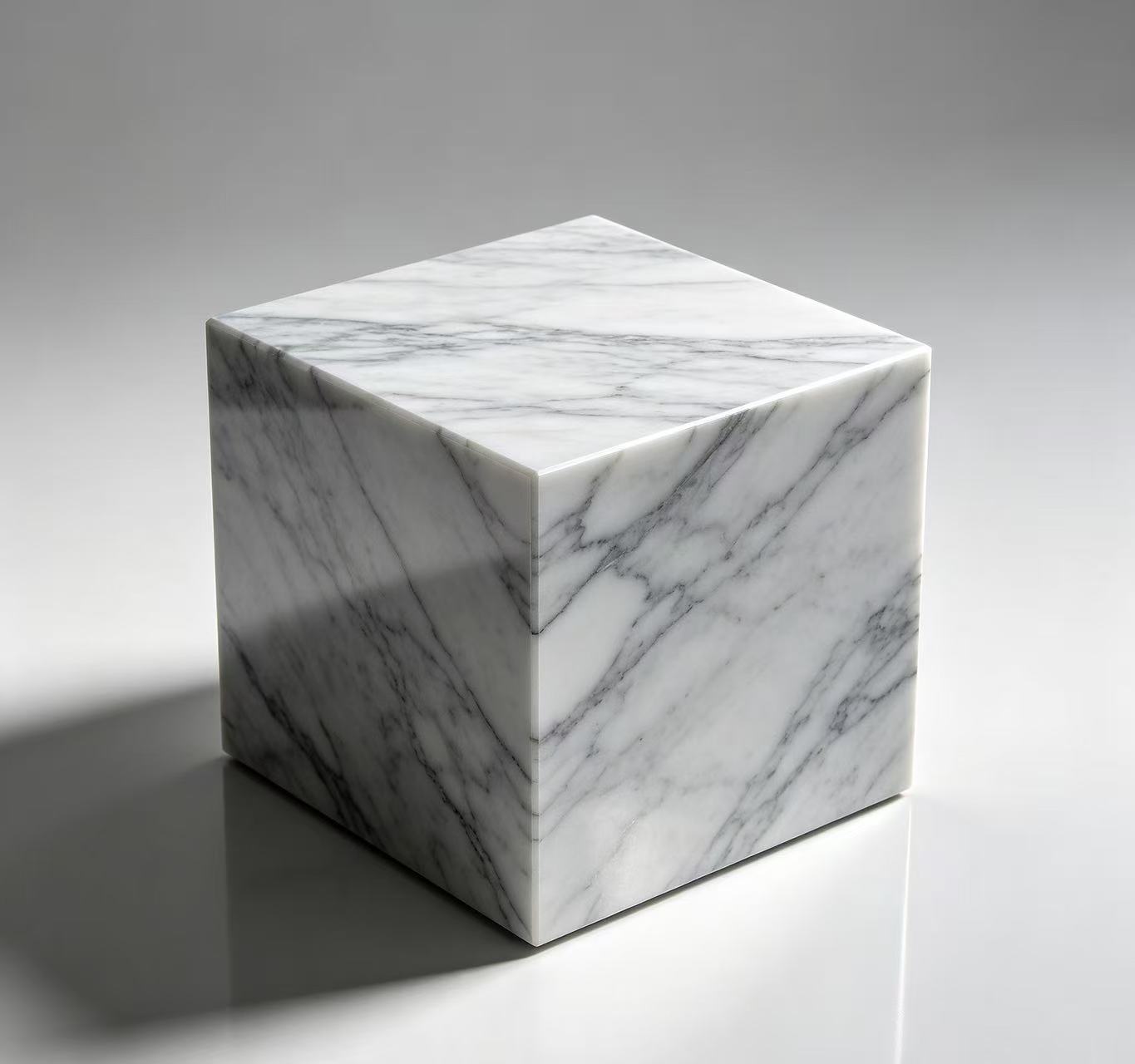
A reliable stone processing partner should combine finishing quality with repeatable commercial execution.
Conclusion
For international buyers in the decision or execution stage, a long-term stone processing partnership is not a luxury. It is the most practical way to manage quality, capacity, lead time, and commercial risk across multiple orders. The factory that wins the second and third order must be capable of more than slicing stone; it must control raw material selection, cutting precision, surface finishing, and inspection with consistency.
GLOBALSTONE demonstrates what that level of partnership requires: a large-scale factory in Shuitou Town, full-chain capability from mining to finished product, specialized equipment for standard and custom stone processing, clear commercial terms for international buyers, and a defined set of quality controls against weathering, staining, edge chipping, and dimensional deviation. For project buyers, distributors, and stone processing partners preparing for 2026 and beyond, the practical next step is to test the factory with a small order, verify the inspection process, and use the results to build a longer supply plan.
Next step: If you are evaluating GLOBALSTONE for a recurring stone processing program, download the GLOBALSTONE company brochure or contact the factory through official channels to request a specification-based quotation and pilot-order plan.
Have Questions or Need More Details?
Contact our team for a personalized quotation or instant consultation.
Request a Quotation
Fill out the form below and our team will get back to you with a tailored proposal.
WhatsApp Direct Chat
Prefer to chat in real-time? Message us on WhatsApp for instant assistance & quick answers.
- Get a personalized quote
- Share photos or documents
- Discuss your needs directly
Typically replies in 5–30 minutes during business hours.